
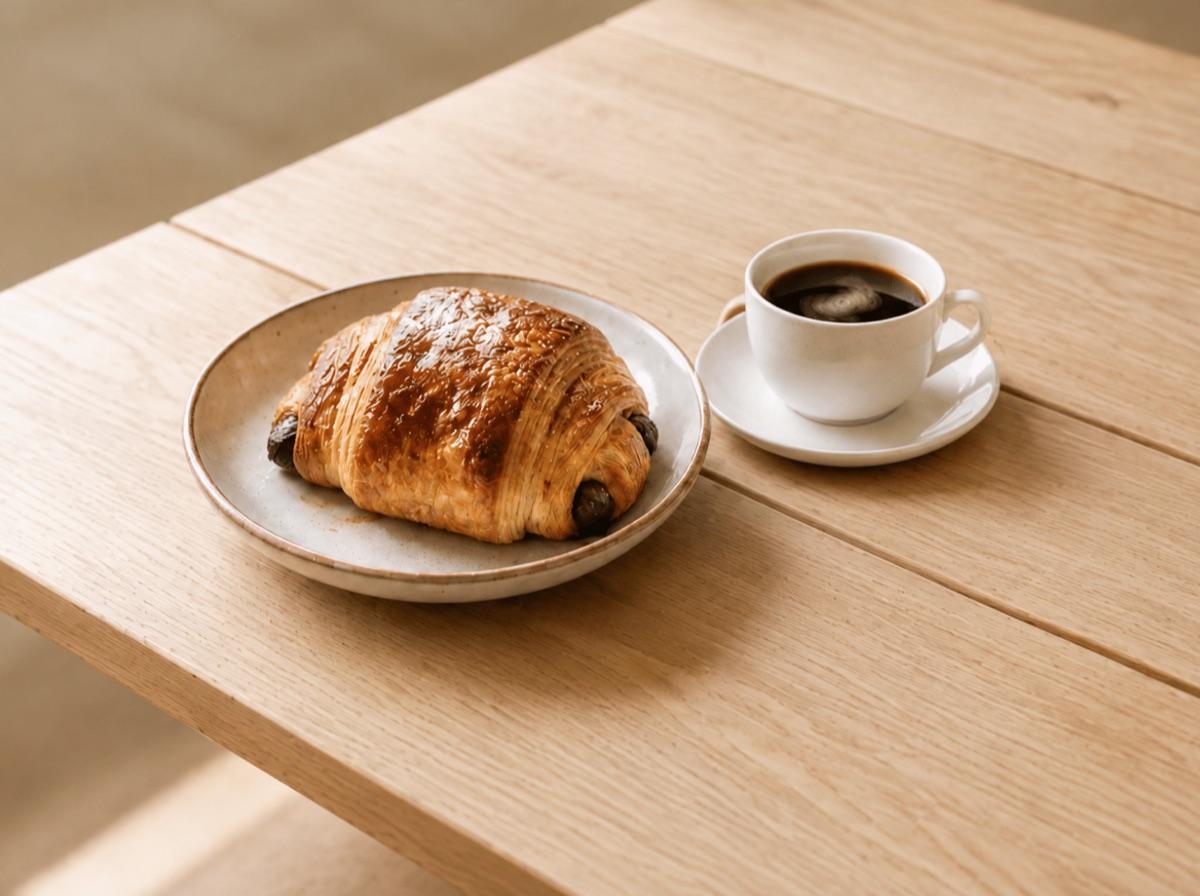
In the world of "dieting" and weight loss, especially over the past while, we keep hearing — and as nutritionists, we're the ones actually recommending it too, not just hearing it — that to boost your weight loss and make it easier to achieve, your breakfast is better off being savory, built around things like eggs, cheese, yogurt, and complex carbs, etc. This helps you stay full longer, keeps your blood sugar steady, lowers the odds of things going off track during the day, and reduces the chances of sudden, hard-to-control hunger hitting you later. Now, all of this is true and scientifically backed, and it really does contribute a huge amount to weight loss… but!
Does that mean we can never have a chocolate croissant, a muffin, or a Danish pastry if we're craving it for breakfast?!!! Let's tell you something that might shock you a little, and on the surface looks like it contradicts the mainstream weight-loss advice…
You absolutely can eat a croissant, a muffin, or a Danish in the morning and still lose weight… but it's important we clarify a few points first ⬇️
Four Things You Need to Understand First
First: food, regardless of what kind it is, is still just food (some people find it hard to accept that all food is just food — there's no such thing as food that "makes you fat" and food that "makes you thin")
Second: most of the advice circulating in the "weight loss" space is really speaking to people whose hunger and fullness signaling is broken or out of sync. That's exactly why, especially early on, the advice needs to be a little restrictive.
Third: there's something a lot of people trying to lose weight overlook, because for years they've followed unbalanced diets that lean heavily toward "extreme" instead of something called balance — meaning the foods that are off-limits at the start of a weight-loss journey are supposed to gradually come back into the diet in a balanced way over time.
Fourth: most people start their weight-loss journey carrying a lot of beliefs, labels, and ideas they think are protecting them. Let me explain a bit: a person starts the journey having labeled a huge portion of foods as "fattening," "unhealthy," or "bad"… etc. All of this is really just an attempt to avoid those foods, because as humans, it's easier for us to avoid something entirely than to deal with it in a balanced way. And unfortunately, people end up pinning these labels on "innocent" foods that have nothing to do with their weight gain — foods they genuinely love and have enjoyed for years. At first they can avoid them, but soon enough the craving comes back… and that's often where the real problem starts.
Now, if you take those four points and flip how you think about them, you'll realize that having a croissant or a muffin for breakfast is not a problem at all — it won't ruin your results or set back your progress. If anything, it can actually help you stick with it and stay consistent, because as we always say, balance and consistency are some of the biggest secrets to getting results and keeping them. Let's walk through, simply, how to "have" a chocolate croissant like it's no big deal, without freaking out.
How to "Have" a Chocolate Croissant for Breakfast Without Freaking Out
1. On the day you're craving a croissant in the morning, go ahead — get in the car, drive to your favorite spot, and get the croissant you actually want or order it in.
2. Since it's definitely higher in calories and fat than your usual breakfast, pair it with a plain coffee or tea, no extras.
3. And this point matters a lot, a lot: don't overthink it, and don't let your brain start spiraling about why you ate it, how you'll "make up for it," or how much you need to move now… etc. Your brain is great at coming up with these unhelpful thoughts. Shut that down, and don't negotiate with it, ever, ever, ever. Enjoy it, and be grateful while you eat it.
4. Carry on with the rest of your day normally and eat your usual meals as planned — but here's the one thing: try to pay a little closer attention to your hunger and fullness cues. Listen to them. Eat until you're hungry no more, and stop once you're full.
5. You can skip any junky snack you'd normally have that day.
6. Make sure that in any given week, you don't have a breakfast like this more than twice. Why? Not because it's "fattening" or "bad," but because if it happens more than that moderate amount, it gets harder to control your thoughts and shut down the negative ones, and you risk slipping into a cycle of guilt and discomfort.
This approach to food can feel difficult at first for someone used to the typical dieting mindset (let's be real, there's a part in all of us that finds this hard). But trying this out will help us build a genuinely healthy relationship with food, enjoy life more, and turn our whole life into a balanced, healthy one instead of a temporary phase. Weight loss is supposed to be temporary, not permanent — what we should actually be aiming for is balance, moderation, and letting go of fear around food. And once we understand that saying no to ourselves sometimes isn't about fear, but about care, commitment, strength, and even more enjoyment, it makes a real difference, both for our mindset and for how we actually enjoy our life and keep our results.