
Many women deal with hormones that feel out of balance and want badly to lose weight, but run into a lot of difficulty and problems every time they try a specific diet. They get discouraged over and over and start believing their willpower is weak, that they cannot do it, and that weight loss is impossible for them. That kind of thinking is very wrong.
The reality is that the problem is usually hormonal imbalance in the body, and dealing with it takes an approach that is far removed from deprivation and strict diets. It is dealt with through balance and gentleness.
If you feel like your body resists every attempt you make to lose weight, or fights you, it is most likely because you have been relying on the wrong approach, one built on strict diets, drastically cutting food, or banning entire food groups. In the end: hunger increases, energy drops, weight plateaus, sugar cravings get stronger, and hormones get even more out of balance.
Why? Because a body with hormonal imbalance needs balance, not deprivation.
In this article we talk about the relationship between hormones and weight loss, why harshness is not the answer, and how you can lose weight in a smarter way that supports your body instead of wearing it down.
How Do Hormones Affect Weight Loss?
Hormones play a big role in: appetite, fullness, fat storage, metabolism and energy, sugar cravings, and how fat is distributed in the body. When they are imbalanced, weight loss can become harder even if you are eating less.
Among the most common weight-related issues that come with hormonal imbalance: insulin resistance, PCOS, cortisol disruption from stress, thyroid disorders, and sleep disruption.
This is where the real problem starts: a woman follows a harsher diet because she believes she is "not doing enough", while her body actually needs support and balance, support and balance achieved through adequate, nutrient-rich food that does the real repair work.
Why Does a Harsh Diet Usually Not Work With Hormonal Imbalance?
1. It Raises Stress in the Body
When you cut your food drastically, your body treats itself as under threat, which can raise cortisol, which is linked to increased hunger and fat storage, especially belly fat.
2. It Increases Sugar Cravings
Severe deprivation makes the body search for quick energy, which is why many women, after days of strict discipline, fall into intense binge episodes.
3. It Slows Down Energy and Movement
Eating too little does not just cut calories, sometimes it also cuts your daily activity, your focus, and even your sleep quality.
4. It Damages Your Relationship With Food
You start feeling like every meal has to be "perfect" and any mistake means failure, which causes an ongoing cycle: diet, deprivation, binge, guilt, restart the diet.
Healthy Weight Loss Starts From Balance
If you have a hormonal imbalance, the goal is not to "eat as little as possible", the goal is to help your body function better. The right food, in the right amount and quality, supports the important bodily functions needed for repair and keeps you in a good, strong, stable mental state, one that lets you do what is needed to correct the imbalance and achieve weight loss.
Let us look at some simple, sustainable habits worth focusing on:
1. Focus on Stable Blood Sugar
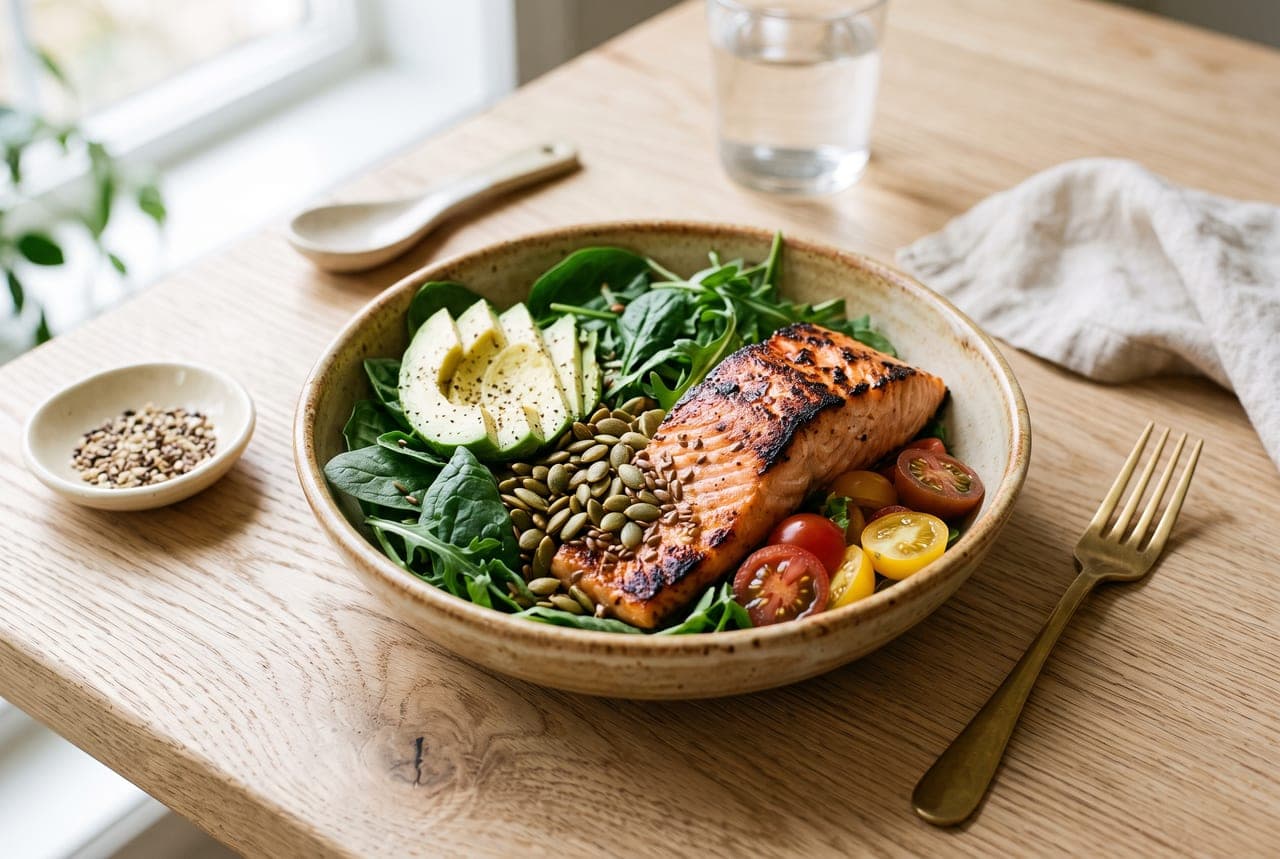
Blood sugar swings cause quick hunger, strong sugar cravings, fatigue and sluggishness, and difficulty controlling portions. Try to make sure your meal includes protein, fiber, healthy fats, and balanced carbohydrates. Example: eggs, whole wheat bread, vegetables, and avocado, or rice, chicken, and salad, or Greek yogurt with fruit and nuts.
2. Do Not Fear Carbohydrates, Eat the Right Kinds in the Right Amounts
One of the biggest mistakes is banning carbs entirely. The truth? Carbs are not the enemy, the type and amount are what matter. Choosing fiber-rich carbs like oats, potatoes, fruit, high-fiber bread, and rice in reasonable amounts supports better energy and fullness without sharp swings.
3. Protein Matters a Lot for Fullness and Hormones
Protein helps reduce hunger, preserve muscle, support your metabolism, and stabilize blood sugar. Excellent protein sources: eggs, chicken, Greek yogurt, fish, meat, and legumes. Make sure it is present in your diet in sufficient amounts.
4. Sleep Is Not a Luxury
Lack of sleep can increase appetite, raise sugar cravings, drain your body's energy, and make consistency harder. Even the best, easiest diet becomes harder to stick to with poor sleep.
5. Smart Exercise Beats Grueling Workouts
If your body is already under stress, overdoing exercise usually makes the problem worse. The best types of movement: walking, resistance training with the right weight and intensity, Pilates, swimming, and light cardio. What matters is consistency, not punishment.
Signs Your Body Is Starting to Improve and Your Hormones Are Regulating
As you start balancing your eating and supporting your hormones, you may notice: better fullness, more stable energy, fewer sugar cravings, more restful sleep, an improved mood, a faster rate of weight loss, less belly fat over time, and a more regular menstrual cycle. These changes matter more than fast, temporary weight loss.
Is Losing Weight With Hormonal Imbalance Possible?
Definitely possible, but not through deprivation, starvation, random dieting, or quick fixes. A body with hormonal imbalance needs balance, patience, an understanding of its real needs, and a plan you can actually live with.
The Bottom Line
If you have a hormonal imbalance, do not blame yourself because a harsh diet did not work. Your body most likely needed a calmer, smarter approach. Real weight loss does not come from fighting your body, it comes from working with your body, not against it.