
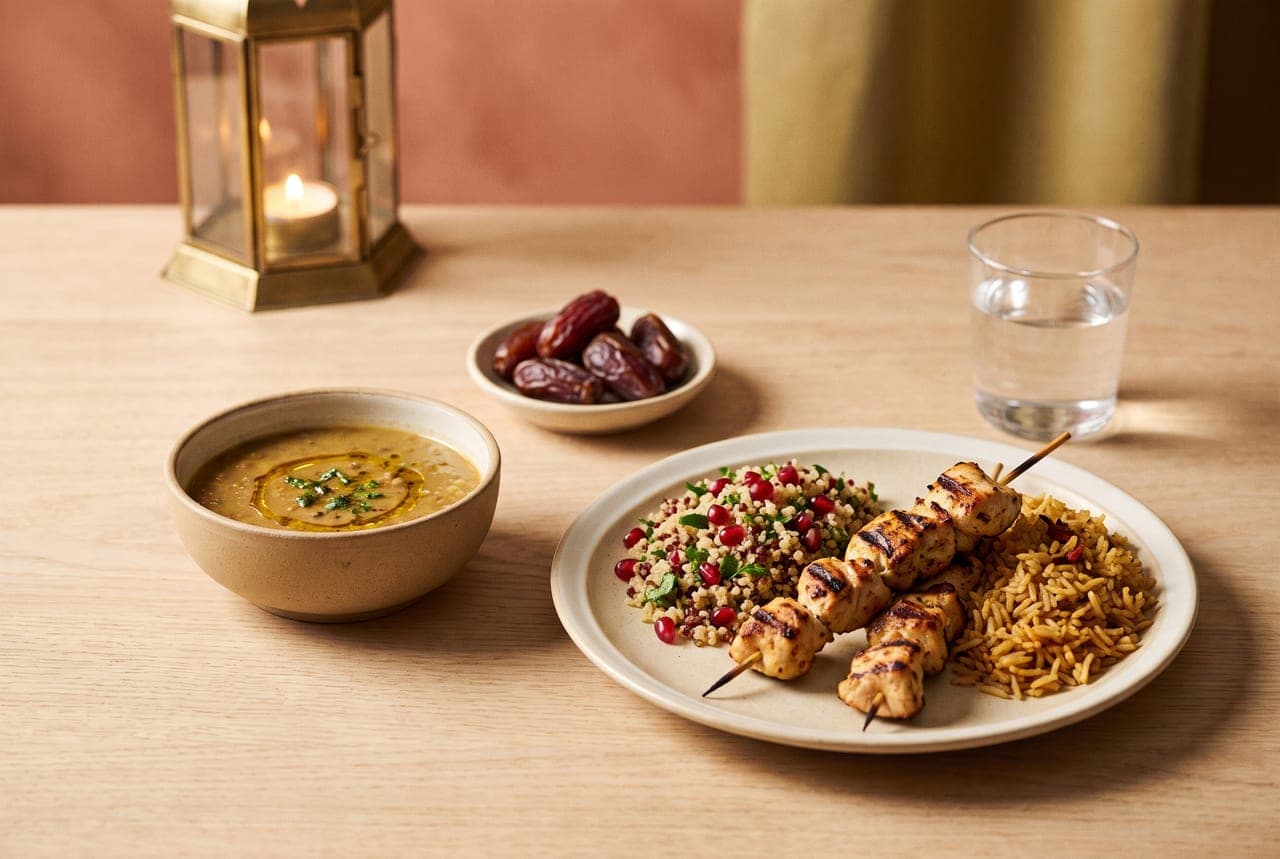
Ramadan does not have to be a time of deprivation or work against your weight loss goal. There is a way to enjoy Ramadan food and still see good results, through a smart calorie deficit and a meal structure that fits the nature of the month.
What Does a Flexible Ramadan Plan Look Like?
- All the usual Ramadan food stays on the table: you can still eat the Ramadan dishes you are used to, just in the right portions for your needs, without feeling cut off from the spirit of the month.
- A flexible meal split: on most days, iftar can be a large, home-cooked meal, so you do not need to prepare separate food from the rest of the household. There is also a second option for those who prefer a lighter iftar and a bigger suhoor.
- A clear, organized structure: a big problem many people face in Ramadan is not knowing how to organize their meals. A clear structure means you do not have to think hard about what to eat or how to count it.
- An open meal with simple guidelines: flexibility does not mean no guidelines at all, but the guidelines stay simple and easy, so you can enjoy gatherings and occasions more.
- Healthy recipes for the whole family: it helps to have healthy, calorie-counted Ramadan recipes sized for the whole family, so you do not need to cook separate food just for yourself.
The core idea is that Ramadan can be a month where you reach your health goals without exhausting yourself, whether your goal is weight loss, organizing your meals, or simply having a lighter Ramadan without the usual digestive issues.